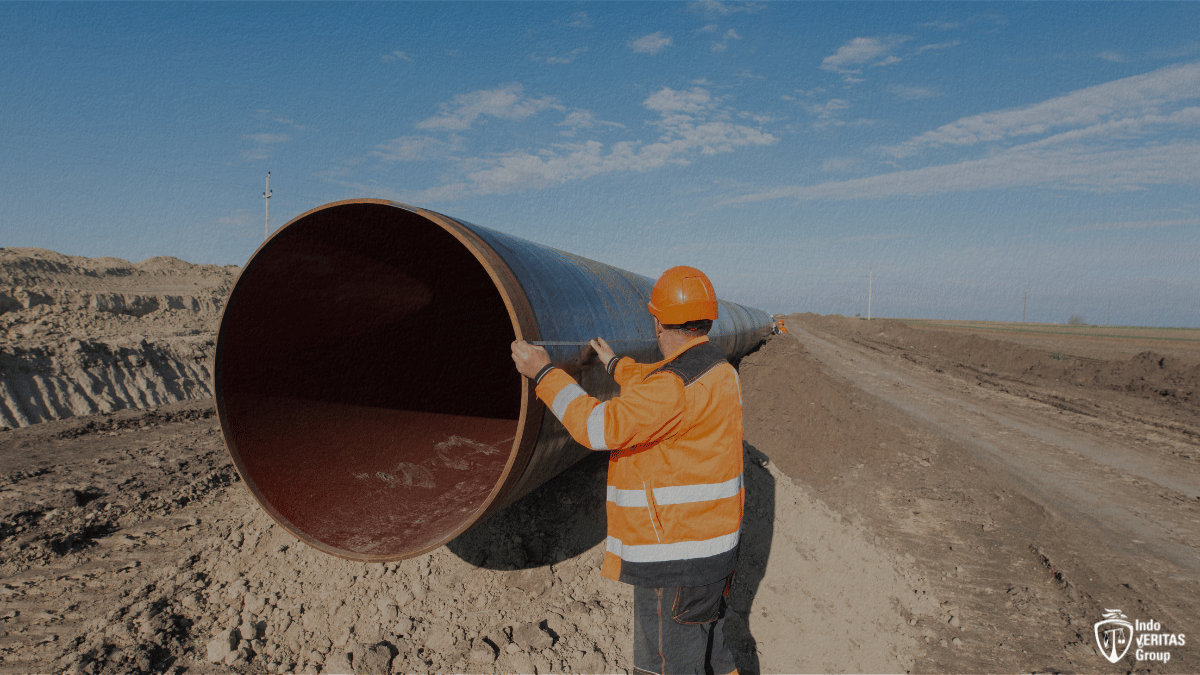
Non-Destructive Testing (NDT) is a key element in maintaining industrial pipeline networks to detect anomalies without damaging the material structure. Considering that pipelines often operate under extreme pressure and temperature conditions, the proper application of NDT methods is essential to prevent fatal leaks that could harm the environment and cause significant financial losses for companies.
The Urgency of NDT Testing in Pipeline Operations
Early Detection of Corrosion and Pipe Wall Thinning
Internal and external corrosion are the primary enemies of piping systems. NDT allows inspectors to identify areas experiencing wall thinning due to chemical reactions or fluid erosion. By recognizing the progression of corrosion at an early stage, companies can schedule repairs before structural failure leads to leakage.
Identification of Welding Defects (Welding Defects) at Pipe Joints
Weld joints are the most critical points in any pipeline network because they are highly susceptible to stress concentration. NDT is intensively used to verify weld penetration quality and detect internal defects such as porosity, slag inclusion, and lack of fusion. Even the smallest anomaly in the weld structure can become the starting point for crack propagation, threatening the overall integrity of the pipe.
In addition to detecting volumetric defects, inspection of pipe joints also ensures that weld geometry meets the required design criteria. This quality assurance at joint locations serves as a benchmark to guarantee that the entire piping system can withstand fluctuating operational pressure and external forces such as machine vibration or ground movement. Accurate NDT verification significantly reduces the risk of joint failure that could trigger explosions or major leaks before high-pressure fluids begin to flow through the pipe.
Compliance with International Safety Standards and Technical Regulations
The oil & gas and manufacturing industries are bound by international standards such as ASME B31.3 and API 1104. Routine implementation of NDT is a mandatory requirement to comply with these regulations. Compliance not only ensures workplace safety but also facilitates audit and operational certification processes from legal and insurance perspectives.
Most Effective NDT Methods for Pipeline Networks
Ultrasonic Testing (UT) for Thickness Measurement
Ultrasonic Testing (UT) operates on the principle of high-frequency sound wave reflection transmitted by a sensor into the pipe material. When the wave reaches the inner wall (backwall), the signal reflects back and its travel time is measured to determine material thickness with high precision. A major advantage of this method is its effectiveness in accurately measuring remaining wall thickness from only one external side, without the need to cut or dismantle an operating pipeline installation.
The data generated from ultrasonic testing provides an objective picture of material thinning caused by internal erosion or corrosion that is not visible to the naked eye. This information is extremely valuable for technical teams to calculate remaining service life and predict when pipes need to be replaced or reinforced. UT data accuracy also serves as the primary basis for determining the Maximum Allowable Working Pressure to ensure the pipeline operates within permitted design limits.
Radiographic Testing (RT) for Examining Weld Penetration Quality
Radiographic Testing utilizes X-ray or gamma radiation energy to penetrate metal structures and produce visual images of the internal weld area. Differences in material density, such as air cavities or foreign inclusions, create contrast in the radiographic results. This method is highly reliable for detecting volumetric defects hidden deep within the material that are often undetectable by surface inspection methods.
One of the main advantages of RT in pipeline networks is the availability of permanent records, whether in conventional radiographic film or modern digital data. These records serve as authentic evidence of weld quality that can be reviewed later for audit or long-term quality evaluation purposes.
Magnetic Particle Testing (MPT) for Surface Crack Detection
For pipes made of ferromagnetic materials such as carbon steel, Magnetic Particle Testing is a fast and economical method for detecting surface and near-surface cracks. The method relies on induced magnetic fields within the pipe body. If cracks or discontinuities are present, magnetic flux leakage occurs at the surface. Fine iron particles applied over the magnetized area accumulate at these leakage points, forming clear visual indications of damage.
This method is highly sensitive in detecting hairline cracks that may not be visible even after cleaning. Its relatively quick process without complex electronic equipment makes MPT a primary choice for routine inspection of weld areas (heat affected zones) and pipe sections subjected to high mechanical stress.
Implementation of Advanced NDT Technologies in Pipeline Networks
Utilization of Phased Array Ultrasonic Testing (PAUT) for Precision
Phased Array Ultrasonic Testing (PAUT) expands conventional ultrasonic technology by using multiple small transducer elements in a single probe to emit sound waves at varying electronically controlled angles. This allows real-time visualization of the material from multiple perspectives without frequent manual probe movement. PAUT provides highly detailed mapping of defect location, depth, and dimensions within pipe walls.
Long Range Ultrasonic Testing (LRUT) for Remote Inspection
LRUT, also known as Guided Wave Testing (GWT), uses low-frequency ultrasonic waves that travel along the pipe wall. Its key advantage is the ability to scan tens of meters of pipe from a single access point. This method is ideal for pipelines with limited access, such as insulated pipes, elevated pipe racks, or buried pipelines, significantly reducing the need for insulation removal.
Eddy Current Testing (ECT) for Non-Ferromagnetic Pipe Materials
For materials such as stainless steel, aluminum, and copper-nickel alloys, Eddy Current Testing is highly effective for detecting surface cracks and wall thickness variations. This non-contact method does not require couplant liquids and is especially efficient for rapid inspection of heat exchanger tubes and condenser piping systems.
Inspection Result Verification and Reporting Procedures
Discontinuity Data Interpretation and Tolerance Assessment
All inspection data must be interpreted by certified NDT personnel at least Level 2 qualification. Each discontinuity is evaluated against acceptance criteria. Not all anomalies are classified as defects; only those exceeding tolerance limits are categorized as reject and require further action.
Preparation of Technical Reports for Repair Plans
Inspection results are compiled into comprehensive technical reports detailing exact locations, types of findings, and defect dimensions. These reports form the basis for maintenance departments to develop effective repair plans and track asset health history over time.
The Role of Certified NDT Inspectors in Asset Safety Validation
The validity of inspection results depends heavily on the integrity and expertise of certified NDT inspectors. Competent personnel ensure that testing follows standard operating procedures and uses properly calibrated equipment, guaranteeing that the data accurately represents actual field conditions.
NDT Investment as a Leak Risk Mitigation Strategy
Implementing NDT in pipeline systems is not merely an additional expense but a strategic investment in operational sustainability. Early detection of corrosion, weld defects, and material thinning helps companies avoid dangerous leaks and costly emergency repairs while protecting environmental and financial interests in the long term.