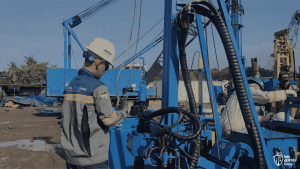
As critical assets that contain fluids under high pressure, pressure vessels demand absolute operational safety. The application of Non-Destructive Testing (NDT) is a mandatory procedure to verify that the integrity of the vessel walls and joints remains strong enough to withstand pressure loads without any risk of structural failure. Through accurate NDT implementation, companies establish a frontline defense in mitigating the risk of fatal explosions that could threaten personnel safety and the continuity of production facilities as a whole.
The Strategic Role of NDT in Pressure Vessel Maintenance
Detection of Metal Fatigue Cracking (Fatigue Cracking)
Pressure vessels often undergo repeated loading and unloading cycles, which can lead to fatigue cracking. These cracks typically originate at stress concentration points such as weld joints or sharp corners. Through routine NDT methods, microcracks can be detected before they propagate into catastrophic structural failures during operation.
Identification of Corrosion Under Insulation (CUI)
Many pressure vessels are wrapped with thermal insulation to maintain the temperature of the internal fluid. This condition often conceals Corrosion Under Insulation (CUI), which occurs due to moisture ingress behind the protective layer. NDT enables inspectors to identify material thinning caused by corrosion without having to dismantle the entire insulation system manually.
Verification of Operational Fitness in Accordance with ASME Section VIII
In manufacturing and oil & gas industries, compliance with international standards such as ASME Section VIII is mandatory. NDT serves as a technical verification tool to ensure that pressure vessels, whether newly fabricated or maintained, meet the established safety thresholds. This compliance provides both legal and technical assurance that the asset is safe to operate at its design working pressure.
Preparation and Safety Procedures for Pressure Vessel Inspection
Surface Preparation for Optimal NDT Wave Penetration
The accuracy of test results heavily depends on the condition of the inspected surface. Before testing begins, the vessel surface must undergo surface preparation, such as removing rust, scale, or residual paint that could obstruct the penetration of sound waves or magnetic particles. A clean surface ensures that the indications detected by the instrument represent actual material defects rather than external contaminants.
Confined Space Entry Procedures for Internal Vessel Inspection
Conducting inspections inside a pressure vessel requires strict Confined Space Entry procedures. This includes oxygen level testing, hazardous gas purging, and providing adequate emergency access for inspectors. Personnel safety is the top priority before any technical NDT activities can be performed within the vessel’s confined interior.
NDT Equipment Calibration Using Standard Reference Blocks
To ensure data validity, all NDT equipment must be calibrated using standard reference blocks with material specifications similar to the vessel being tested. This calibration ensures that the instrument sensitivity is set correctly to detect discontinuities according to acceptance standards. Without proper calibration, the risk of data misinterpretation increases significantly.
Essential NDT Methods for Pressure Vessel Inspection
Ultrasonic Testing (UT) for Wall Thickness (Shell) Mapping
Ultrasonic Testing is widely used to map thickness profiles on the shell and head of pressure vessels. By transmitting high-frequency sound waves, inspectors can detect material thinning due to internal corrosion or fluid erosion. This thickness mapping is crucial to verify whether the remaining material thickness is still above the minimum allowable safe limit.
Magnetic Particle Testing (MT) on Nozzle and Lifting Lug Areas
Areas around the nozzle openings and lifting lugs are subject to high mechanical stress. Magnetic Particle Testing is highly effective in these areas for detecting surface cracks caused by tensile loads or vibration. MT ensures that the integrity of joints in these critical components remains intact despite dynamic working loads.
Liquid Penetrant Testing (PT) for Micro-Leak Detection in Welds
To detect very small discontinuities open to the surface, Liquid Penetrant Testing is often applied to pressure vessel weld joints. The penetrant liquid seeps into microscopic gaps that may not be visible to the naked eye. This method is highly useful for identifying micro-leak paths that could become escape routes for high-pressure fluids if left unrepaired.
Advanced NDT Techniques for Defect Depth Analysis
Use of Time of Flight Diffraction (TOFD) for Accurate Crack Sizing
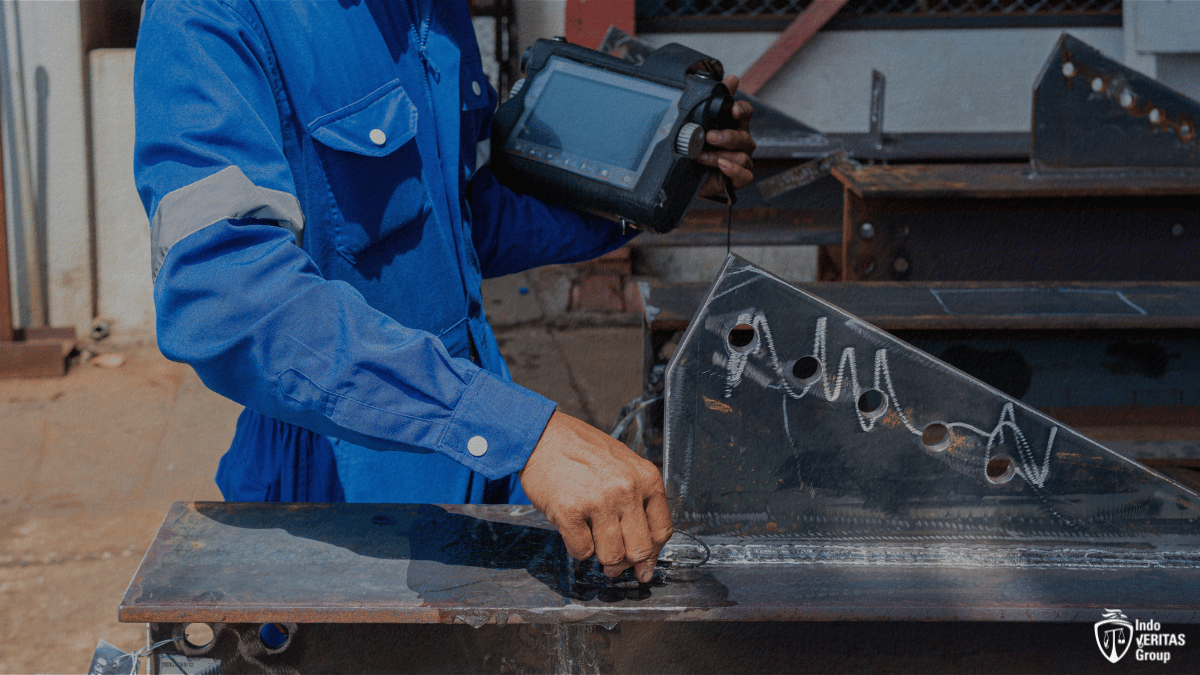
Time of Flight Diffraction (TOFD) is an advanced ultrasonic technique that utilizes wave diffraction principles from defect tips. This method provides very high accuracy in determining the length and depth of cracks within weld joints. TOFD’s ability to present digital data enables technical teams to perform precise sizing analysis to determine the most appropriate corrective actions.
Radiographic Testing (RT) on Circumferential and Longitudinal Welds
Radiographic Testing uses X-ray radiation to produce internal images of weld joints, both circumferential and longitudinal. RT is capable of clearly detecting internal defects such as lack of fusion or internal porosity. The permanent documentation generated by RT is essential as evidence of compliance with stringent pressure vessel manufacturing standards.
Internal Visual Inspection Using Remote Visual Inspection (RVI) Technology
If the internal areas of the vessel are difficult for personnel to access directly, Remote Visual Inspection (RVI) technologies such as endoscopic cameras or inspection robots can be utilized. This technology allows visual examination of internal surfaces, scale buildup, or indications of localized corrosion without exposing personnel to confined space risks.
Evaluation of Results and Pressure Vessel Risk Management
Service Life Assessment Based on Annual Corrosion Rate
After wall thickness data is collected, the technical team analyzes the annual corrosion rate to estimate the remaining service life of the asset. By calculating thickness differences over time, companies can predict when the pressure vessel will reach a critical thickness. This information forms a strong basis for maintenance budgeting and future asset replacement planning.
Determination of a Safe Re-inspection Interval
Based on NDT findings and the vessel’s criticality level, re-inspection intervals must be professionally determined. This scheduling ensures that any potential failures can be detected before they develop into serious problems. Proper intervals balance inspection operational costs with the safety level of the production facility.
Technical Documentation for Kemnaker/Migas Inspection Certification
All NDT test results must be documented in comprehensive technical reports as a requirement for submitting Riksa Uji certification to relevant authorities such as Kemnaker or Migas. This documentation includes the methods used, locations of findings, and technical recommendations from certified inspectors. Complete reports facilitate the verification process by labor or energy authorities to issue operational permits for pressure vessels.
Synergy Between NDT and Pressure Vessel Integrity Management
The implementation of NDT in pressure vessels goes beyond regulatory compliance and becomes an integral part of asset integrity management. Through a combination of conventional methods and advanced techniques, the risk of workplace accidents due to explosions or leaks can be effectively minimized. The synergy between proper preparation, appropriate testing methods, and accurate data analysis ensures that pressure vessels operate safely, efficiently, and with extended service life to support industrial sustainability.