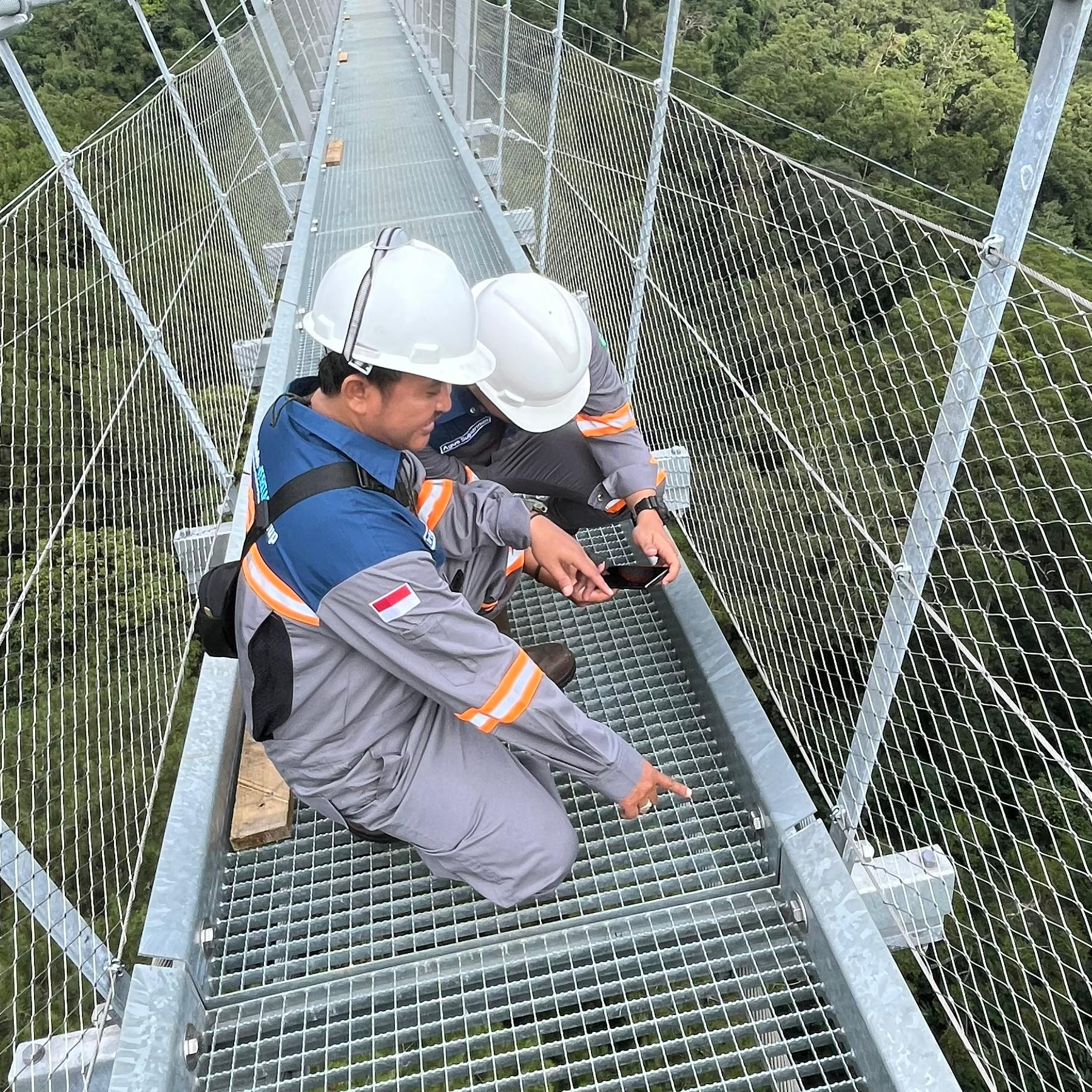
At Indo Veritas Group, we provide professional Height Safety Inspection services to ensure that all fall protection systems, anchor points, and working-at-height equipment are safe to use and comply with both Indonesian regulations and international standards. Our services help companies manage fall risks, meet legal obligations, and maintain operational continuity for work at height.
Inspections are conducted on-site, objectively, and fully documented, including Anchor Testing (Uji Riksa Angkur) according to applicable standards.
Why Height Safety Inspection is Essential
Work at height carries a high risk of accidents, often with severe or fatal consequences. Untested or poorly inspected fall protection systems may fail when needed most.
Height Safety Inspection is required to:
- Ensure anchor points and fall protection systems are safe to use
- Reduce the risk of serious injury or death
- Comply with occupational safety regulations
- Provide documented evidence of compliance for audits and inspections
Indo Veritas Group Approach
We focus on regulatory compliance, real-world safety, and transparent documentation. Every inspection is based on the actual installed system, not just product specifications, ensuring that safety systems are truly ready for use.
Applicable Regulations & Standards
Indonesian Regulations:
- Permenaker No. 9 of 2016 – Occupational Safety and Health (K3) for Work at Height
- SNI 8603:2018 – Anchor Testing Method for Work at Height
International Standards:
- EU Regulation 2016/425 – Personal Protective Equipment (PPE)
- EN 795:2012 – Personal Fall Protection Equipment – Anchor Devices
Scope of Height Safety Inspection
We inspect all critical components of working-at-height systems, including:
- Permanent and non-permanent anchor points
- Horizontal and vertical lifeline systems
- Fall arrest and fall restraint systems
Each component is checked for installation quality, strength, and suitability for use.
Types of Anchors Inspected
Inspections follow EN 795 classification:
Type A – Structural Anchor
Eyebolt anchor systems permanently installed on structures
Type B – Non-Structural Anchor
Sling anchor systems for temporary use
Type C – Flexible Anchor (<15°)
Horizontal safety line systems
Type D – Rigid Anchor (<15°)
Rail-type safety line systems
Type E – Deadweight Anchor (<5°)
Counterweight anchor systems that do not penetrate the structure
Anchor Testing Methodology
EN 795 Approach
- Destructive testing in laboratory settings
- Results support Certificate of Conformity (CoC) and CE marking
- Applied to anchor products, not installed systems
SNI 8603 Approach
- Ensures installed anchors are safe to use
- On-site testing using non-destructive deformation testing
- Anchors remain operational after inspection
Anchor Testing (Uji Riksa Angkur)
Anchor testing verifies:
- Anchor point strength
- Installation quality and method
- Suitability for fall protection systems
All tests are performed by qualified personnel with full documentation for safety assurance and compliance.
Height Safety Inspection Process
- Identify types and locations of anchors
- Conduct visual and technical inspections
- Perform non-destructive deformation testing
- Evaluate compliance with regulations
- Prepare detailed inspection reports
Documentation & Reporting
Each inspection delivers:
- Comprehensive inspection and testing reports
- Assessment of system fitness for use
- Technical recommendations, if necessary
- Supporting documents for audits and regulatory checks
Who Needs Height Safety Inspection
- Building owners and facility managers
- Industrial and manufacturing facilities
- Contractors and subcontractors
- Maintenance and operations teams
Risks of Not Conducting Inspections
- Fall protection system failure
- Serious injury or death
- Violation of occupational safety regulations
- Legal and operational consequences