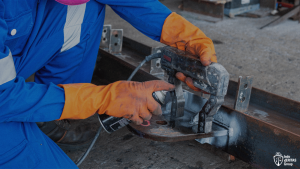

In the field of material testing, two primary methods are commonly used: Non-Destructive Testing (NDT) and Destructive Testing (DT). Both serve the same fundamental purpose—evaluating material quality and strength, but they differ significantly in their approach.
NDT allows materials to be inspected without causing damage, whereas DT deliberately subjects materials to failure in order to determine their ultimate strength and performance limits.
Comparison Table: NDT vs DT
| Aspect | NDT | DT |
| Testing Approach | Evaluation without damaging the material; it remains usable after testing. | Material is tested until failure; generally cannot be reused. |
| Objective & Focus | Detects defects or damage to prevent failure before it occurs. | Determines material strength limits and behavior under extreme loads. |
| Methods Used | Penetrant testing, ultrasonic testing, radiography, magnetic particle testing, visual inspection. | Tensile testing, compression testing, impact testing, wear testing, bending testing. |
| Speed & Efficiency | Relatively fast for routine inspections with minimal downtime. | More time-consuming due to destructive processes and sample preparation. |
| Cost & Reusability | More cost-effective long-term since materials remain usable. | More expensive due to material destruction and replacement. |
| Type of Defects Identified | Effective for surface and internal defects without damage. | Reveals complete failure points and damage mechanisms. |
Definitions of NDT and DT
Before exploring their differences in depth, it is important to understand what NDT and DT each represent.
What Is NDT (Non-Destructive Testing)?
Non-Destructive Testing (NDT) is a technique used to inspect materials or structures in order to detect defects or damage without altering or damaging their physical condition.
The primary goal of NDT is to identify issues such as cracks, corrosion, or porosity that may affect material performance, while preserving the material’s ability to remain in service.
NDT is especially important in applications requiring continuous condition monitoring without replacement or operational disruption, such as the automotive, oil and gas, and manufacturing industries.
What Is DT (Destructive Testing)?
Destructive Testing (DT) is a testing method used to evaluate material properties by intentionally damaging or altering the material.
The main objective of DT is to determine the ultimate strength and resistance of materials under extreme conditions, providing insight into how a material behaves when failure occurs.
DT is commonly used in research and development of new materials, as well as for testing materials that are intended for one-time use or replacement.
Key Differences Between NDT and DT
From testing approach to objectives, the following are the main distinctions between these two methods:
Testing Approach
- NDT: Evaluates materials without damaging or altering their physical form. Materials remain usable after testing.
- DT: Tests materials to their failure point. Materials are generally unusable afterward.
Objectives and Focus
- NDT: Focuses on detecting defects or damage to prevent failure before it occurs.
- DT: Focuses on understanding material strength limits and response to extreme loads.
Methods Applied
- NDT: Liquid penetrant testing, ultrasonic testing, radiographic testing, magnetic particle testing, and visual inspection.
- DT: Tensile testing, compression testing, impact testing, wear testing, and bending testing.
Advantages and Limitations of NDT and DT
Advantages of NDT
- Does not damage the material
- Can be performed during production or operation
- Cost-effective in the long term
- Ideal for routine inspections
Limitations of NDT
- Not all types of defects can be detected
- Requires specialized equipment and trained technicians
Advantages of DT
- Provides detailed data on material strength and performance
- Ideal for material development and quality validation
Limitations of DT
- Destroys the material
- Higher long-term cost
- Longer testing time
Applications of NDT and DT Across Industries
NDT in the Automotive Industry
Used to inspect vehicle components such as frames and engines using ultrasonic and radiographic methods.
NDT in the Oil and Gas Industry
Applied to detect cracks or corrosion in pipelines and storage tanks using radiographic and ultrasonic testing.
DT in the Construction Industry
Used to test construction materials such as concrete and steel through tensile, compression, and bending tests.
DT in Aerospace Material Testing
Applied to ensure aircraft components can withstand extreme conditions using impact and tensile testing.
NDT vs DT in Material Testing Processes
Speed and Efficiency
- NDT: Faster for routine inspections
- DT: Slower due to intensive testing procedures
Cost and Material Reusability
- NDT: More economical since materials can be reused
- DT: More costly due to material destruction
Types of Defects Identified
- NDT: Effective for surface and internal defects
- DT: Reveals complete material failure mechanisms
NDT vs DT – Which Is Right for Your Needs?
NDT is the preferred choice for preventive and ongoing inspections, while DT is more suitable for in-depth strength evaluation, particularly in research and development.
Choosing between NDT and DT depends on testing objectives, budget considerations, and specific industrial applications.
If you need assistance selecting the most appropriate testing method or would like expert consultation on NDT or DT, Indo Veritas is your trusted partner for professional material testing solutions tailored to your industry needs.