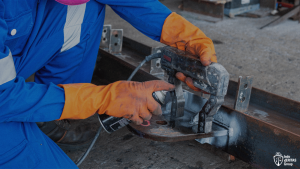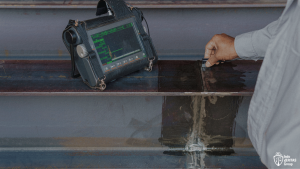

How can hidden cracks be detected without dismantling or damaging components? This is where Non-Destructive Testing (NDT) plays a vital role. With the support of NDT tools, inspections can be carried out accurately and efficiently without disrupting the function of the equipment or system being tested.
What Is NDT (Non-Destructive Testing)?
Non-Destructive Testing (NDT) can be likened to a medical check-up for industrial components—performed without disassembly or damage. This technique is used to evaluate the condition of materials, structures, or equipment with the objective of detecting defects such as cracks, corrosion, or deformation before they lead to more serious failures.
Because testing is performed without damaging the test object, NDT allows routine inspections to be conducted without shutting down production processes. This makes it essential in industries such as energy, aviation, construction, and manufacturing, where downtime and the risk of damage must be minimized.
Types of NDT Tools and How They Work
Different NDT methods require specific tools and materials. Below are several commonly used NDT tools and an explanation of their working principles:
1. Ultrasonic Testing (UT)
Equipment Used: Ultrasonic Flaw Detector with transducer probe Ultrasonic Testing uses high-frequency sound waves (typically 1–10 MHz) transmitted into the material.
These waves travel through the material and are reflected back by internal boundaries or defects such as cracks, porosity, or corrosion. UT instruments analyze the time-of-flight and amplitude of the reflected signals to determine the location and size of defects.
UT is widely used for pipe thickness measurement, weld inspection, and internal corrosion detection in the oil & gas, automotive, and aerospace industries.
2. Radiographic Testing (RT)
Equipment Used: Portable X-ray machines or gamma ray sources Radiographic Testing utilizes X-ray or gamma radiation to create internal images of materials. The radiation passes through the material and is captured by film or digital detectors on the opposite side.
Differences in density or defects (such as internal cracks or porosity) appear as dark or light areas, providing a detailed view of the internal structure.
RT is commonly used for inspecting weld joints, pressure pipes, and metal components in the aviation, energy, and construction industries.
3. Magnetic Particle Testing (MT)
Equipment Used: Magnetic yoke, prods, headshot, or coils for magnetization, along with dry or wet magnetic particles Magnetic Particle Testing is applicable only to ferromagnetic materials (such as steel). This method creates a magnetic field within the test object, after which magnetic particles are applied.
If surface or near-surface defects are present, magnetic flux leakage occurs at the defect location, causing particles to accumulate and form visible indications.
MT is effective for detecting surface and shallow subsurface cracks in machine components, welds, and steel structures.
4. Liquid Penetrant Testing (PT)
Materials Used: High-capillarity penetrant liquid, developer, and cleaner Liquid Penetrant Testing is used to detect surface defects in non-porous materials (metal, plastic, ceramics).
The process involves cleaning the surface, applying penetrant that seeps into fine cracks, removing excess penetrant after a dwell time, and applying a developer that draws penetrant out of defects—making them visible as lines or spots on the surface.
PT is widely used for surface inspection of welds, castings, and precision components.
5. Eddy Current Testing (ET)
Equipment Used: Eddy current probe and impedance measurement instrument Eddy Current Testing uses electromagnetic fields to induce eddy currents in conductive materials.
Changes in probe impedance occur due to variations in thickness, conductivity, or the presence of defects such as cracks or corrosion.
ET is effective for surface and subsurface inspection of conductive materials (such as aluminum and stainless steel), coating thickness measurement, and crack detection in tubing, pipes, and aerospace components.
Factors to Consider When Selecting NDT Tools
Before selecting NDT equipment, it is important to understand that each method has its own strengths and limitations. Choosing the right tool must align with technical requirements in the field. Key factors include:
1. Type of Material Being Inspected
Ferromagnetic materials are suitable for MT, while UT or RT is required for non-ferrous materials. ET is applicable only to conductive materials, while PT and visual testing are suitable for various non-porous materials. Understanding material properties ensures effective NDT application.
2. Defect Depth and Location
For surface or near-surface defects, PT or MT is simpler and faster; for internal defects, UT or RT is more appropriate. Acoustic Emission (AE) can detect real-time defect development in large structures.
3. Inspection Speed and Efficiency
ET or UT with automated scanning is relatively fast for large areas, while RT requires radiation setup and image interpretation, which can be more time-consuming. Choose the right balance between speed and accuracy based on inspection schedules.
4. Cost and Practicality
RT equipment (X-ray/gamma) is generally expensive and requires controlled areas and radiation safety procedures. UT, ET, MT, and PT are typically more portable with lower operating costs. However, RT provides detailed internal images that are sometimes irreplaceable.
Advantages of Using NDT Tools in Material Testing
Non-Destructive Testing offers significant benefits, especially in maintaining material quality without damage. Key advantages include:
1. No Damage to Materials
NDT allows repeated inspections without compromising material integrity, which is critical for high-value or safety-critical components. This supports preventive maintenance without disrupting functionality.
2. Early Defect Detection
NDT enables early identification of defects such as micro-cracks, early-stage corrosion, or inclusions—preventing sudden failures that could cause major downtime or accidents.
3. Reduced Downtime and Maintenance Costs
Fast and efficient inspections support predictive maintenance and scheduled repairs before critical damage occurs. Industries such as energy, oil & gas, and manufacturing benefit greatly from minimized downtime.
Choosing the Right NDT Tools for Effective Material Inspection
Selecting the appropriate NDT tools should be based on the following considerations:
1. Inspection Objectives
Is the inspection intended for surface defects, subsurface defects, or dynamic monitoring? Each NDT method is designed for specific detection purposes.
2. Material Properties
Ferromagnetic materials are suitable for MT, conductive materials for ET, while PT is more flexible for various non-porous materials.
3. Working Environment
Consider whether inspections are conducted in open areas, confined spaces, radiation-sensitive zones, or other hazardous environments.
4. Budget and Resources
Evaluate equipment costs, technician training requirements, and safety procedures—particularly for RT, which requires strict radiation protocols.
5. Compliance with Standards
Ensure that tools and procedures comply with standards such as ISO, ASTM, ASME, or other applicable regulations. This is essential to ensure results are valid and accepted by auditors or regulators.
Ensure your material inspections use the right and reliable NDT equipment. Contact us for consultation on the best NDT tools for your industrial needs and enhance your operational reliability and safety.