
Lifting equipment such as slings, shackles, chain blocks, and cranes plays a critical role in heavy industrial operations.
However, continuous use inevitably leads to degradation, wear, and hidden damage that can pose serious safety risks.
To ensure workplace safety and compliance with national and international regulations, routine inspection, testing, and certification of lifting gear are essential for every company.
Why Is Lifting Gear Inspection Important?
Lifting gear inspection is not merely about compliance—it is fundamentally about safety and operational efficiency. Below are three key reasons why routine inspection must never be overlooked:
1. Natural Equipment Degradation
All lifting equipment experiences performance deterioration over time due to friction, material fatigue, cyclic loading, and exposure to harsh working environments such as humidity or corrosive particles.
Without periodic inspections, early-stage damage, such as micro-cracks or hidden corrosion, may go undetected, potentially leading to sudden equipment failure during operation.
Routine inspections allow early identification of wear and damage, enabling timely repair or replacement before accidents occur.
2. Legal and Regulatory Requirements
In Indonesia, safety standards related to lifting equipment are regulated under SNI (Indonesian National Standards) and occupational safety (K3) regulations, further detailed in ministerial regulations governing inspection and testing of lifting equipment.
For example, Ministry of Manpower regulations require all lifting and material handling equipment to undergo periodic inspection and testing.
Compliance is not a formality—failure to conduct inspections may result in legal sanctions, fines, operational shutdowns, and reputational damage in the event of an accident.
3. The Importance of Routine Lifting Gear Inspection
Routine inspections ensure that equipment remains safe and fit for use.
With recommended inspection frequencies (generally every 6 months for lifting gear components such as slings, shackles, and hooks, and annually or as specified by standards for larger cranes), companies can significantly reduce accident risks, extend equipment service life, and improve operational efficiency.
Inspection results also serve as a foundation for planned maintenance and budgeting for component replacement before failure occurs.
Lifting Gear Testing
Lifting gear testing is required to verify that equipment performs according to its design capacity and does not contain hidden structural defects. Common testing methods include:
1. Load Testing
Equipment is subjected to loads exceeding the specified Working Load Limit (WLL), typically between 125% and 150% of the WLL, to verify structural integrity.
Load test results confirm that components can safely withstand operational loads plus an adequate safety margin.
2. Non-Destructive Testing (NDT)
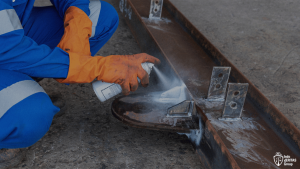
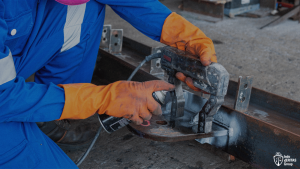
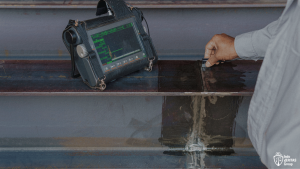
NDT techniques allow inspection without damaging the material, such as visual inspection, dye penetrant testing for surface cracks, magnetic particle inspection for defects in ferrous metals, and ultrasonic testing for internal flaws.
These methods are highly effective in detecting hidden defects without compromising equipment strength.
3. Visual Inspection
Visual inspection is conducted using direct observation and auxiliary tools such as boroscopes or hammer testing to identify physical damage, deformation, or corrosion.
It is often the first and most routine step in any lifting gear inspection program.
Testing results are used to determine the next course of action—whether the equipment is safe for continued use, requires repair, or must be replaced. All test documentation must be retained for audit and internal reporting purposes.
Lifting and Rigging Certification
Lifting gear certification is an official document stating that the equipment meets defined safety and performance standards. Certificates can only be issued by accredited inspection bodies or qualified third parties in accordance with national or international standards.
1. Validity Period
The validity period varies depending on equipment type and applicable regulations, typically ranging from 6 months to 1 year, or based on inspection results.
2. Accreditation
Certification bodies must hold national accreditation (such as KAN in Indonesia) or relevant international accreditation. This ensures certificate credibility during internal and external audits.
3. Certification Documentation
Certification documents include equipment identification, inspection results, testing methods, inspection dates, repair recommendations, and certificate validity dates. These documents are essential for K3 compliance audits and insurance validation in the event of damage or accidents.
On-Site and In-House Inspection Services
PT INDO VERITAS GROUP provides comprehensive lifting gear inspection services through:
1. On-Site Inspection
Inspections are carried out directly at the client’s worksite. Benefits include reduced downtime and transportation costs, as well as immediate inspection without relocating heavy equipment.
Certified technicians arrive with portable equipment to perform visual inspections, basic NDT, and portable load testing according to equipment capacity.
2. In-House Inspection
For more comprehensive testing or when on-site testing is not feasible, clients may send lifting gear to INDO VERITAS facilities.
Our facilities are equipped with complete testing systems (such as hydraulic test rigs, proof load test rigs, and NDT laboratories), enabling in-depth inspection and certification in accordance with applicable standards. All inspections comply with SNI, ISO, and occupational safety (K3) regulations.
All inspections are conducted by experienced, internationally certified technicians specializing in lifting and rigging inspection.
Inspection results, testing data, and repair recommendations are documented in comprehensive reports suitable for internal audits, external audits, and K3 documentation.
Benefits of Lifting Gear Inspection with PT INDO VERITAS GROUP
1. Certified Technical Experts
Our inspection team holds certifications from national and international bodies, ensuring inspection quality and reliability.
2. Modern Testing Equipment
Our in-house facilities are equipped with advanced load testing and NDT equipment, delivering accurate and dependable results.
3. Fast and Flexible Service
On-site inspections minimize operational disruption, while in-house services provide thorough testing when required.
4. Complete and Legally Valid Documentation
Inspection reports and certificates meet audit, legal, and insurance requirements.
5. Strong Support for K3 Systems
With valid inspection and certification results, companies can more easily achieve zero-accident targets and strengthen workplace safety culture.
Ensure your lifting equipment meets industry safety and legal standards. Contact PT INDO VERITAS GROUP for professional and reliable lifting gear inspection, testing, and certification services.