
In high-risk industrial sectors such as mining, oil and gas, and large-scale construction, the reliability and safety of lifting equipment are critical success factors for operations.
Even the smallest component failure can trigger production disruptions or serious incidents.
For this reason, systematic and periodic inspection is not only a regulatory requirement, but also a strategic measure to minimize risk and maximize productivity.
What Is Lifting Equipment Inspection?
Before discussing technical details, it is important to understand the fundamental concept of lifting equipment inspection. This section explains the definition, objectives, and scope of inspection, preparing readers to appreciate its importance in extreme industrial environments.
Lifting equipment inspection is a series of evaluation procedures that include visual examination, non-destructive testing, and technical measurements.
Its purpose is to verify the physical condition and mechanical performance of equipment against safety standards, detect potential defects at an early stage, and protect company assets from operational disruptions or accidents.
The Importance of Inspection in High-Risk Industries
Environments such as mines and oil refineries require lifting equipment to operate under high loads, extreme temperatures, and exposure to corrosive substances.
The points below highlight why routine inspections play a vital role in maintaining production continuity and worker safety:
- Reducing operational downtime caused by sudden equipment failure.
- Preventing workplace accidents that may result in injury, fatalities, or material losses.
- Extending equipment service life through preventive maintenance actions.
- Ensuring projects proceed according to schedule and budget.
Commonly Used Inspection Methods
We now turn to the inspection techniques most frequently applied in the field.
By understanding these methods, you can select an inspection strategy that matches your equipment characteristics and operating conditions.
Non-Destructive Testing (NDT)
Non-Destructive Testing (NDT) enables comprehensive evaluation without damaging the material. The following NDT techniques are commonly applied to lifting equipment:
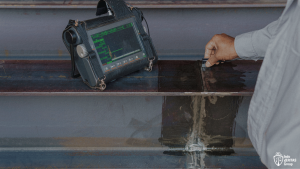
- Ultrasonic Testing: Uses ultrasonic waves to identify internal defects in metal components.
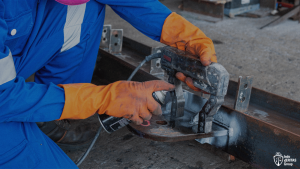
- Magnetic Particle Testing: Detects surface and near-surface cracks in ferromagnetic materials.
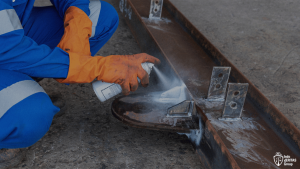
- Dye Penetrant Testing: Highlights fine surface discontinuities using high-contrast penetrant liquids.
Load Testing
Load testing verifies that lifting equipment can safely withstand loads exceeding its nominal capacity. This section explains the procedure and its relationship to the Working Load Limit (WLL).
Load testing is conducted by applying standardized loads up to the specified maximum, observing structural behavior, and recording deformation—providing a benchmark for long-term operational suitability.
Visual Inspection and Measurement
In addition to NDT and load testing, visual inspection is often the fastest initial assessment. Common visual and precision measurement activities include:
- Visual Examination: Identifying deformation, corrosion, cracks, or wear on components.
- Precision Measurement: Using digital calipers, strain gauges, or pressure sensors to verify technical specifications.
Lifting Equipment Inspection Process in Heavy Industry
Each working environment presents unique challenges. This section outlines step-by-step inspection practices in mining, oil and gas, and construction sectors.
Inspection Preparation and Planning
A combination of technical documentation and historical data forms the basis of inspection scheduling. Key preparatory steps include:
- Reviewing equipment manuals and certificates.
- Analyzing performance data and maintenance history.
- Defining inspection procedures based on ISO, OSHA, or SNI standards.
Inspection Execution in Mining Operations
Mining conditions—characterized by dust, vibration, and limited access—require adaptive inspection methods. Inspectors must be technically and logistically prepared.
This includes using protected testing equipment, personal safety systems for work at height, and detailed photographic documentation and field reports.
Inspection in the Oil and Gas Industry
Highly corrosive and high-pressure environments in refineries demand stricter inspection standards. Key considerations include:
- Integrated application of NDT and load testing techniques.
- Inspection protocols aligned with API and ASTM standards.
- Use of protective coatings to mitigate corrosion from salt exposure and extreme temperatures.
Inspection in Construction and Infrastructure Projects
During construction phases, lifting equipment is often temporary and frequently reconfigured. Inspection practices must adapt to this dynamic environment.
Primary focus areas include rigging stability, supporting structure strength, and verification of correct installation before equipment is put into service.
Best Practices in Lifting Equipment Inspection
After understanding the methods and processes, the next step is applying best practices to ensure inspections are effective and sustainable.
Inspection Frequency and Scheduling
Timely inspection scheduling minimizes risk. Recommended inspection intervals include:
- Daily: Pre-operation visual checks.
- Monthly: Light technical inspections and lubrication.
- Periodic (every 3–6 months): In-depth inspections by certified technicians.
- Annually: Comprehensive audits in accordance with national and international standards.
Digital documentation is strongly recommended to support condition tracking and compliance audits.
Modern Technologies in Inspection
Technological innovation enhances early detection and real-time monitoring. Tools that improve inspection quality include:
- Thermal cameras to identify abnormal hotspots.
- Integrated load sensors for 24/7 monitoring.
- IoT-based devices for automatic transmission of equipment condition data.
Inspector Training and Certification
Inspection quality is highly dependent on personnel competency. Inspectors should hold ISO, API, or SNI certifications and participate in continuous training programs to stay current with the latest methods and safety standards.
Selecting the Right Inspection Service for Your Industry
Finally, choosing a reliable inspection partner is just as important as the inspection process itself. This section guides you in evaluating and selecting the right service provider.
Criteria for Selecting an Inspection Provider
- Official accreditation and certified inspectors.
- Proven project portfolio in mining, oil and gas, and construction sectors.
- Strong reputation supported by documented inspection results.
- Modern testing equipment and up-to-date methodologies.
Choose Indo Veritas as Your Professional Inspection Partner
Indo Veritas is a trusted partner for inspections in extreme industrial environments. Our key strengths include:
- Internationally certified and highly experienced inspectors.
- Comprehensive, calibrated testing equipment compliant with global standards.
- Efficient workflows based on ISO, API, and SNI standards.
- Operational support from the SpanSet Group, with over 50 years of global experience.
Case studies demonstrate that Indo Veritas has successfully reduced downtime, prevented incidents, and extended the service life of client equipment. Contact us today for premium inspection solutions tailored to the mining, oil and gas, and construction industries.